What 1,500 Absolut ads reveal about building an iconic brand
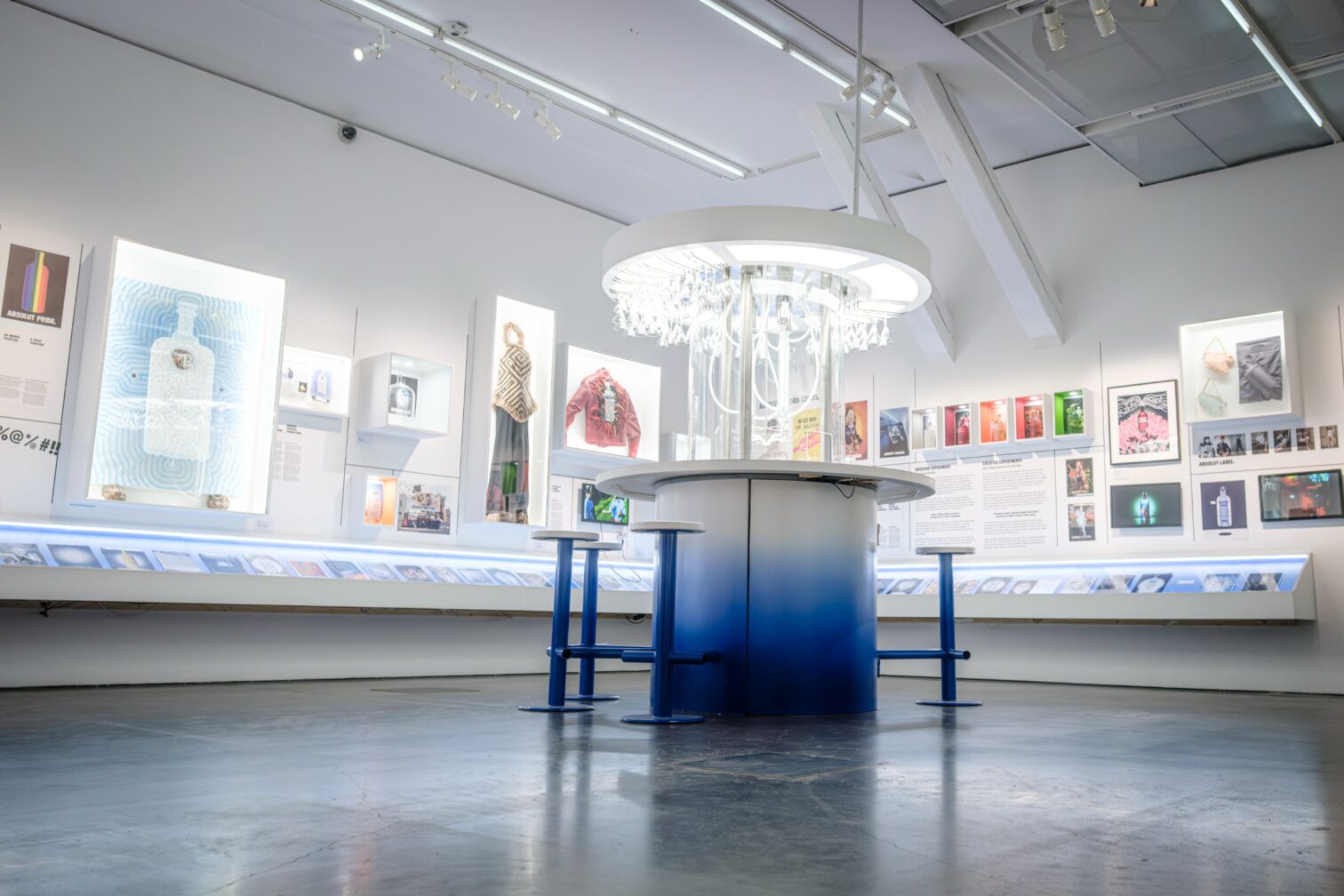
This month, Spritmuseum in Stockholm opens Absolut Absolut, the first major exhibition to tell the full story of Absolut Vodka’s creative journey – from its 1979 launch to its rise as one of the world’s most recognisable cultural brands.

More than a retrospective of iconic ads, the exhibition explores how a single bottle became a canvas for art, wit and cultural relevance across decades.
We spoke with Lovisa Severin Kragerud, Corporate Archivist & Chief Storyteller at The Absolut Company, and Mia Sundberg, curator at Spritmuseum. They share what it takes to build a brand that becomes part of culture, why preserving that history matters, and the unseen stories behind the work that shaped Absolut’s legacy.
What is the Absolut Absolut exhibition about, and what can visitors expect?
Mia: The exhibition tells the story of Absolut Vodka from its launch in 1979 to the present day, exploring its journey from being “the new kid on the block” to one of the world’s most iconic spirits brands.
It examines the key factors behind Absolut’s success, from groundbreaking advertising and collaborations with artists and designers to its ability to constantly reinvent itself in a changing world.
Mia Sundberg
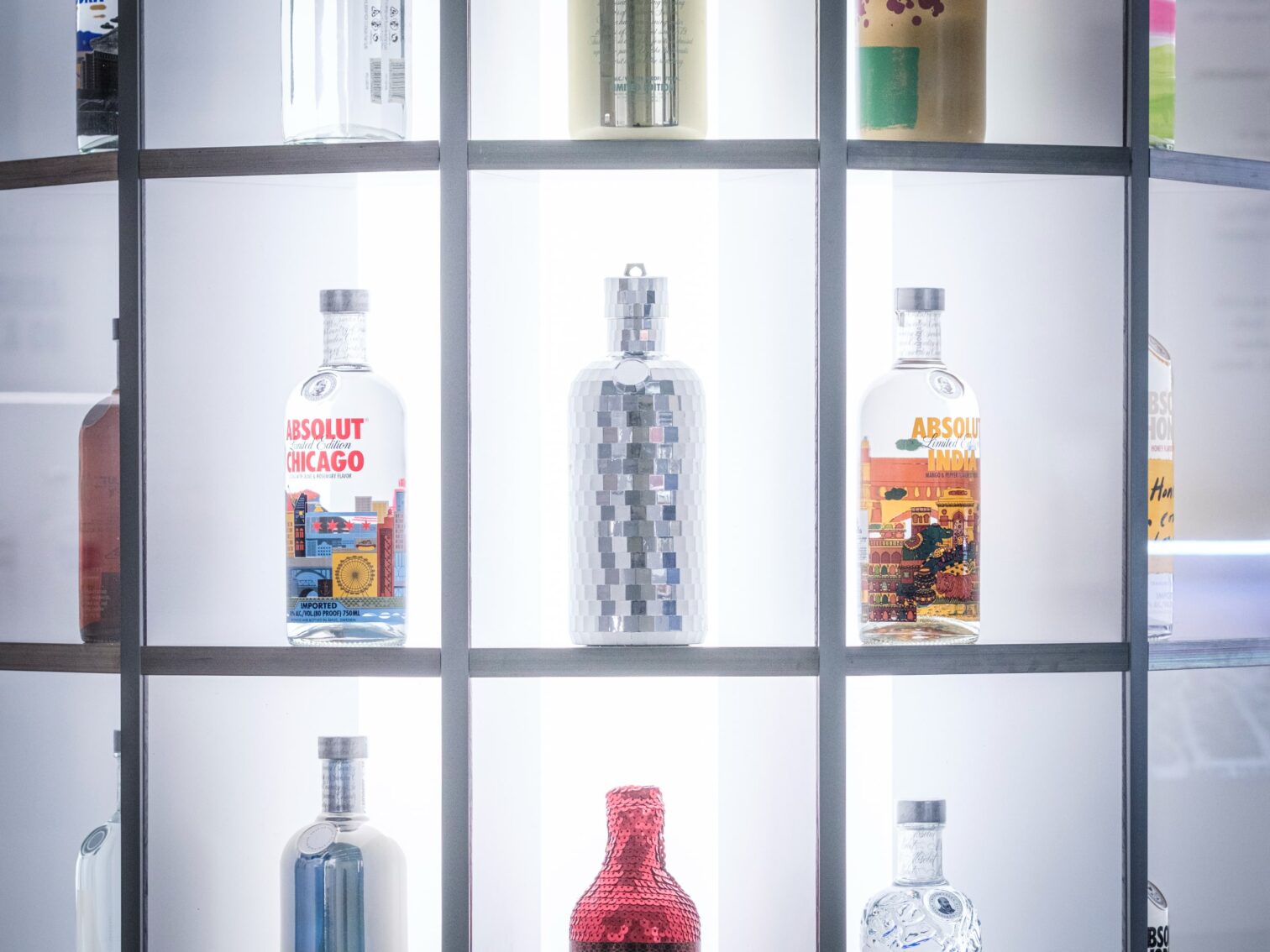
Visitors will step into a world packed with classic campaigns, contemporary art, design objects, photography, films and archival material that show how Absolut helped shape popular culture far beyond the world of spirits. We have also tried to offer visitors a behind-the-scenes look at the craft, creativity and strategy behind building a global brand.
With over 1,500 pieces to choose from, how did you help facilitate the selection process?
Lovisa: The archive is quite massive – spanning digital assets like films, and physical pieces like fashion items and bottles – spread across three different locations. If you’re coming from the outside, it can be quite hard to get a true overview, so I was essentially an archive guide, mapping everything out: what we have, where it lives, what the gems are. I pointed Mia and her team in different directions and showed some of my favourite pieces, and from there they chose what to include in the exhibition.
Is there a story behind a specific piece that most visitors won’t know?
Lovisa: There are great stories behind so many items, especially the ad props. Every single one of them was handmade, with no digital interference whatsoever.
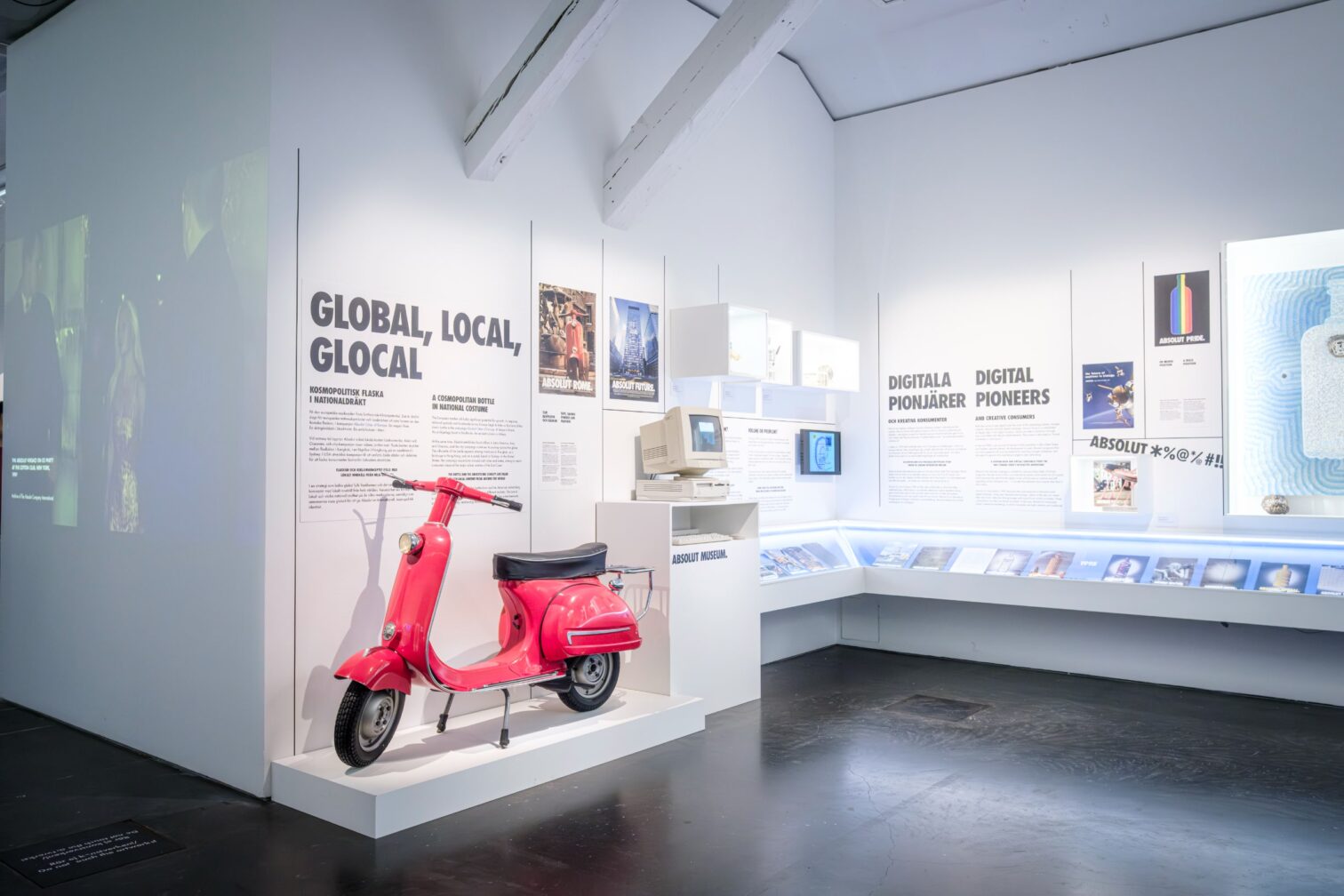
Take Absolut Rome: they actually built a red Vespa just for the photo shoot. The amount of work behind each ad is really quite massive.
Lovisa Severin Kragerud
We recently acquired a collection of original props from a retired TBWA employee who had kept them in his apartment for years. When we unpacked them, it was genuinely exciting, I’ve only ever seen them in the ads. I really hope the stories behind all the pieces come through in the exhibition – especially how Absolut played with everyday themes and made them witty and fun.
The exhibition features work by artists like Andy Warhol, Vivienne Westwood, and Annie Leibovitz. As a curator, how do you think about the line between advertising and art?
Mia: The exhibition includes a number of artworks, among them one of the two Warhol paintings created for Absolut, as well as fashion pieces and other collaborations. They are an essential part of the story. But the focus is just as much – if not more – on the brand history and the craft behind the advertising that helped put Absolut on the map.
The line between art and advertising is such an interesting question. The two fields have always cross-pollinated each other, trading ideas and methods. That relationship is constantly being renegotiated and redefined, and I don’t think it can – or should – ever be fully settled.
Advertising rarely ends up in a museum. What does it take for a commercial campaign to cross that threshold?
Mia: It’s true that advertising rarely takes centre stage in museums. And when it does appear, it’s often used to illustrate a particular era or provide context for something else.
What makes Absolut different is the scale of its cultural impact and the extraordinary consistency of its creative vision over time.
Mia Sundberg
The campaign moved beyond conventional advertising and became part of popular culture, design history and contemporary art discourse.
Absolut was inducted into the American Marketing Association’s Marketing Hall of Fame in 1992 alongside brands like Coca-Cola and Nike, which says a lot about the level of influence it achieved.
The ads ran on a single creative idea for decades. What does the exhibition say about the value of creative consistency?
Mia: During our research, one person pointed out how genius the name Absolut really is. It carries a kind of built-in energy and openness that allowed the same core creative idea to evolve over time without losing its identity. The simple two-word format was used in more than 1,500 ads over two decades, which is quite remarkable.
I hope visitors will reflect on the challenge all brands face: how to remain recognisable and consistent while also adapting to cultural and social change.
The Absolut campaign shows that creative consistency does not have to mean repetition or rigidity. On the contrary, a strong and clear identity can create space for renewal.
Mia Sundberg
Today more than ever, consumers want authenticity from brands and want to see their own values reflected in those they engage with.
The ads were hugely successful internationally, but near invisible in Sweden due to alcohol marketing regulations. What does it feel like to finally see them at home?
Lovisa: It’s pure joy, really. I get to hang out with the pieces every day – that’s probably why my job is so great – but I’m so grateful that Swedes can finally experience the full story of Absolut and its creativity.
I’m genuinely excited to see people’s reactions. The ads are so fun and clever, so witty.
When you look at one, it might take a few seconds before you understand, and then you get that moment of “oh” – it really flirts with your intellect.
Lovisa Severin Kragerud
I think that’s what made them so popular. I’m also personally proud that Absolut was bold and collaborated with the LGBTQIA+ community since 1981. The brand was daring and courageous from the beginning, and that mix of boldness and wittiness is a great combo.
What do you think it means for Swedish audiences to encounter these ads for the first time, in a museum, decades later?
Mia: Through the years that we have shown works from the Absolut Art Collection, I have noticed that many Swedes feel a real sense of pride in the brand. We all know it was an enormous marketing success, but I sometimes wonder whether we fully grasp locally just how deeply Absolut penetrated American pop culture.
While interviewing former employees and collaborators in the United States, it was striking to hear them describe the scale of the phenomenon that Absolut became. I hope Swedish audiences visiting the exhibition will walk away with that same sense of amazement.
Archiving advertising history is a niche within a niche. What gets permanently lost when brands don’t protect their creative heritage, and why should it matter today?
Lovisa: The heart of the brand gets lost, really. That’s why I do interviews with colleagues who’ve been in the company for many years, to capture the stories behind the campaigns, not just the final output.
It’s also one of the best ways to make people care about brand legacy. When you take them through the archives, they get a real history lesson, they can actually touch and feel the items.
You can see how it sparks their imagination and pride to be part of something bigger, to know that what they’re creating today will end up in the archive for the next generation of marketers.
Lovisa Severin Kragerud
But it’s more than just preserving vintage ads, it’s also proof. Founding documents, market presence, legal records. Our history is what makes us unique, and no other brand can compete with it.
And practically speaking, the digital era now makes archiving easier than ever. We have a very powerful digital archive, which means I can collect assets from colleagues quickly and easily.
If there’s one lesson from Absolut’s creative history that you think the industry has forgotten and should rediscover, what would it be?
Lovisa: Being bold. And I think it’s important to say that being bold doesn’t have to mean being provocative. It can mean standing up for minorities, being smart and witty, tongue-in-cheek.
Absolut was bold from the very beginning – the LGBTQIA+ community and Absolut have been entwined since 1981 – and I think the combination of boldness and wit is a really powerful one. You can still do a lot of good work without being aggressive about it.
Which piece in the exhibition is your favourite and why?
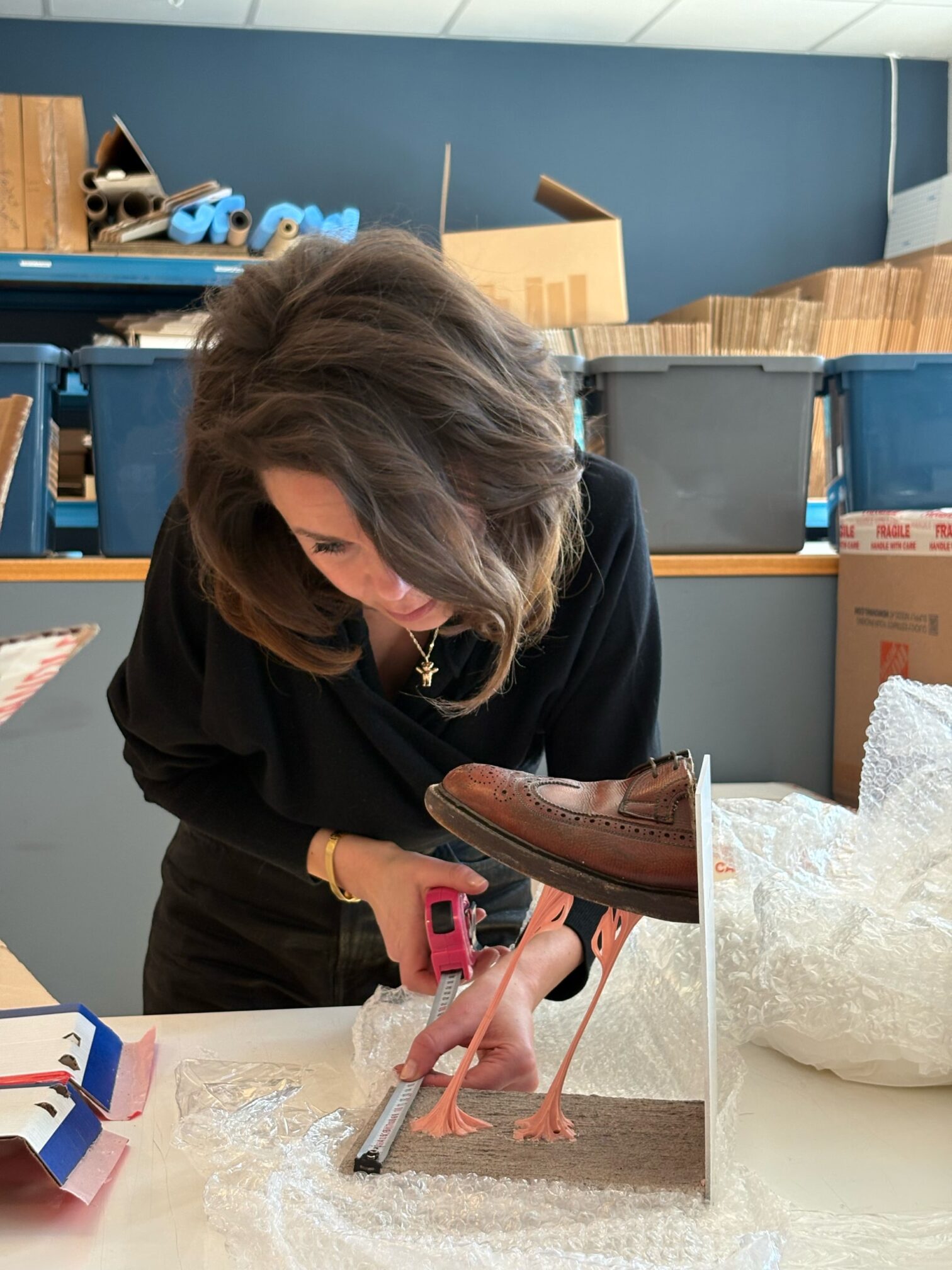
Mia: My favourite is called “Absolut #{¡¡^@x!!” and I love it because it’s so cheeky. It shows a shoe stuck in chewing gum on a sidewalk, and I think it’s hilarious. The story goes that it was published in a high-end glossy magazine, and someone at the agency was criticised for completely misreading the target audience. Then they received several unexpected calls, including one from an elderly lady from the Upper East Side – New York’s most elegant neighbourhood – saying how much she loved it. I think that says something about the confidence and wit of the campaign at its best.
Lovisa: I actually remember unpacking the gum – it was moulded in the shape of the Absolut bottle and so fragile. I was terrified I’d break it!
But my favourite has to be The Advocate magazine from November 1981. When I started eight years ago, the legal team asked whether we had proof of working with the LGBTQIA+ community since 1981. After a lot of research, I found that Absolut had placed an ad in the November 1981 issue of The Advocate.
I contacted the magazine – which is still running – to ask for a digital copy. But they actually sent us one of the original magazines, because Absolut has been a supporter for so many years. It’s probably the most-used item in my entire archive. It’s really close to my heart.
Absolut Absolut opens at Spritmuseum, Stockholm, on 20 May 2026 and runs for two years.